By Dan Surtees, Vice President of Strategy, XCCommerce | Featured on The Financial Revolutionist | October 2026
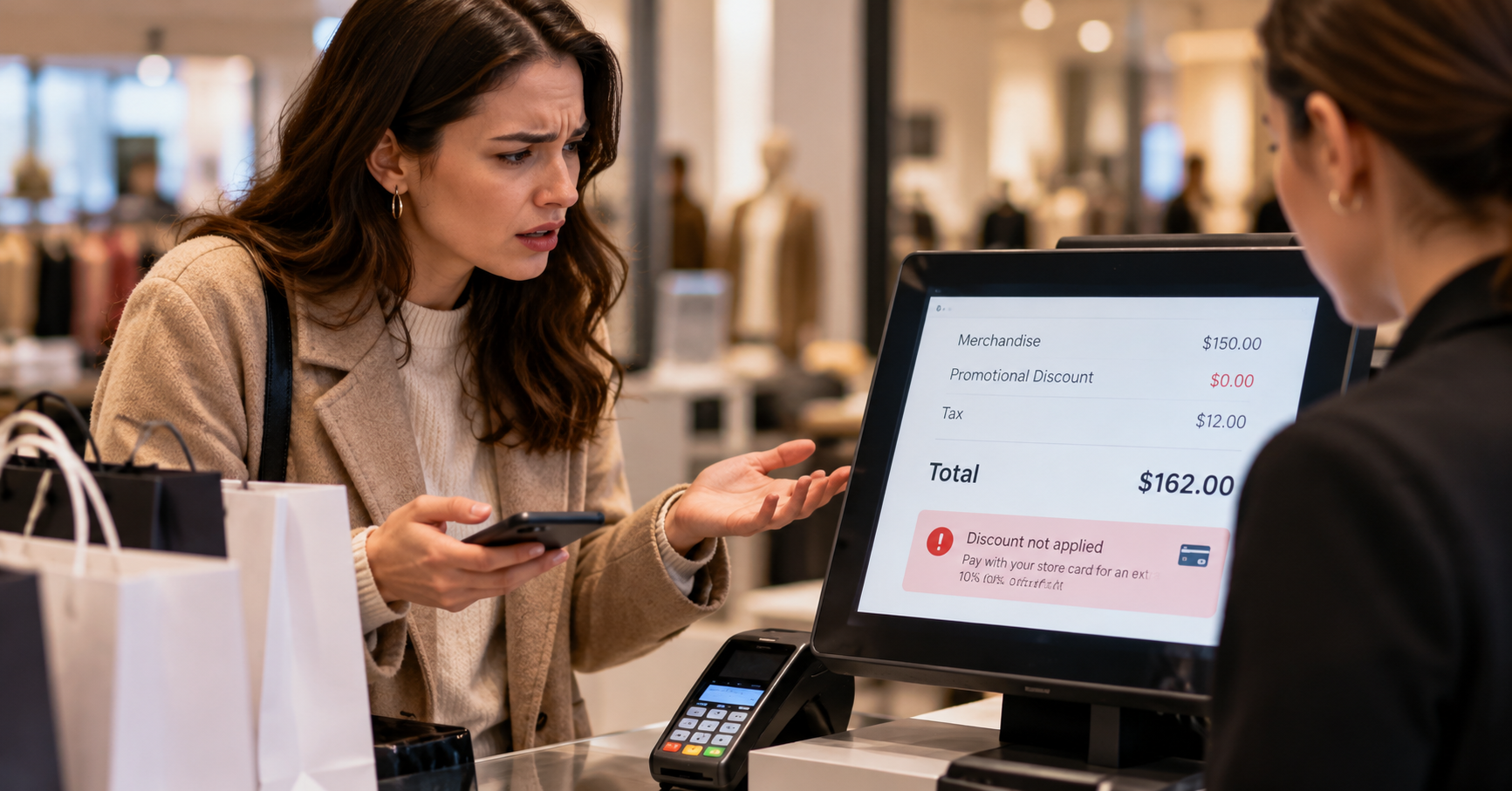
Retailers have invested millions in creating seamless shopping experiences, but a single promotional error at checkout can undermine that investment, resulting in lost sales, frustrated customers and declining loyalty.
As retailers, card issuers and digital wallets increasingly use payment-linked discounts to drive purchases, promotions are becoming a critical part of payments infrastructure. When promotion and payment systems don’t work together, shoppers risk being charged the wrong amount.
One Basket, Two Different Prices
Consider a shopper with $150 in merchandise, a $10 loyalty reward and a 20% digital coupon.
- Online: Both offers stack, bringing the total to $110.
- In-store: The POS system only accepts the $10 reward, leaving the shopper paying $140.
That’s a $30 difference for the exact same purchase.
These inconsistencies have real consequences. According to XCCommerce’s 2026 Retail Promotions Shopper Study, 60% of consumers would abandon a retailer entirely after experiencing inconsistent pricing across channels.
Why Promotions Belong in the Payment Stack
Many retailers still rely on disconnected systems for in-store promotions, ecommerce discounts, loyalty rewards and payment-linked offers. Each may apply different rules for eligibility, stacking and redemption.
The challenge becomes even greater when the payment method determines the discount. A store credit card, digital wallet or buy now, pay later provider may unlock an additional offer that must be calculated before payment authorization.
To deliver consistent, accurate checkout experiences, retailers should focus on three priorities:
- Unify promotion execution across channels. Apply consistent discount and stacking rules across stores, ecommerce, mobile and other checkout environments.
- Treat promotions as transaction data. Capture discounts at the line-item level to support accurate payments, refunds, reconciliation and reporting.
- Integrate payment methods into promotion calculations. Recognize tender-based offers in real time so shoppers receive eligible discounts before being charged.
The Bottom Line
Checkout is often the last interaction a shopper has with a retailer, and a failed promotion can become the experience they remember most.
Promotions are no longer just a marketing function. They are a critical component of payment execution. Retailers that connect incentives with their payments infrastructure can reduce friction, protect revenue and deliver the consistent experiences shoppers expect.
Read the full article in The Financial Revolutionist →
Frequently Asked Questions
What are payment-linked discounts?
Payment-linked discounts are promotional offers triggered by a specific payment method, such as a retailer credit card, digital wallet or buy now, pay later provider.
Why do promotions fail at checkout?
Promotions can fail when disconnected POS, ecommerce, loyalty and payment systems use inconsistent rules for discount eligibility, stacking or redemption.
How do inconsistent promotions affect retailers?
They can lead to abandoned purchases, lost revenue, customer dissatisfaction, increased support costs and payment reconciliation issues. XCCommerce research found that 60% of shoppers would abandon a retailer over inconsistent cross-channel pricing.
Why should promotions be integrated with payment processing?
Payment-linked incentives can change the final transaction amount. Integrating promotion logic with payment processing ensures eligible discounts are applied before authorization, reducing pricing errors and transaction disputes.
How can retailers ensure consistent promotions across channels?
Retailers can use a centralized, omnichannel incentives engine to apply consistent promotion rules across POS, ecommerce, mobile and other touchpoints while supporting complex offer stacking and payment-linked discounts.