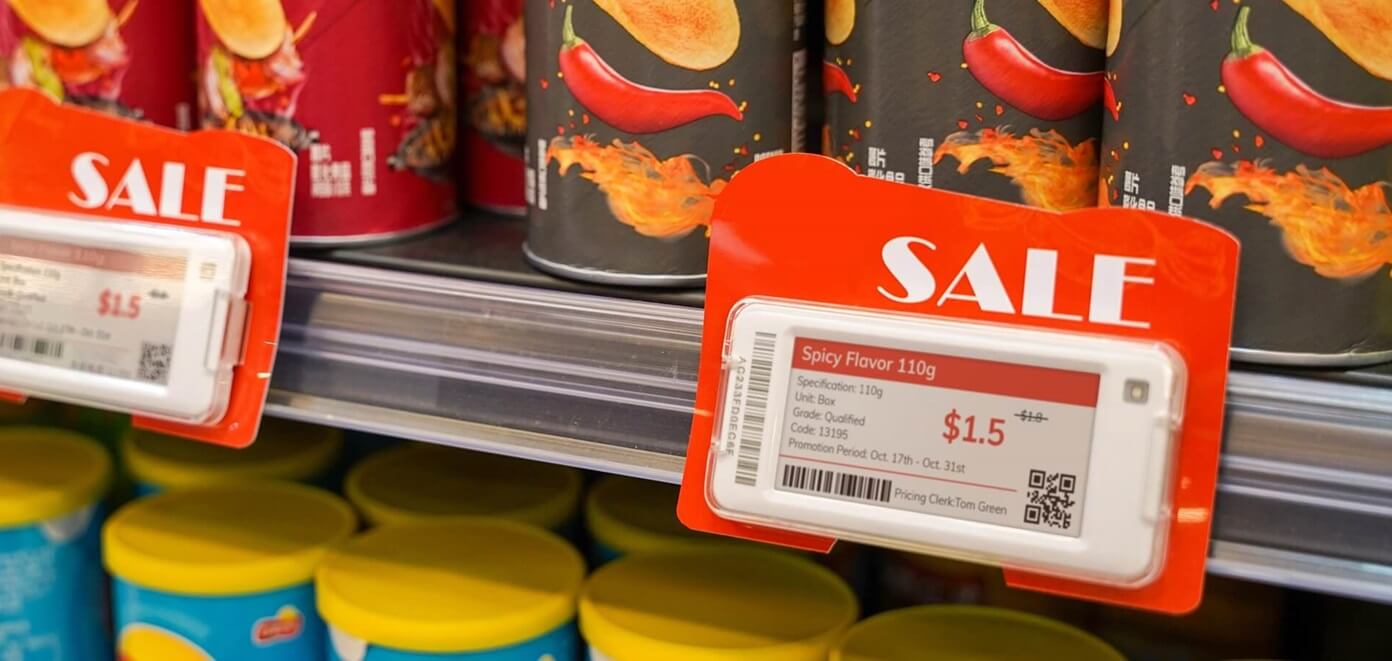
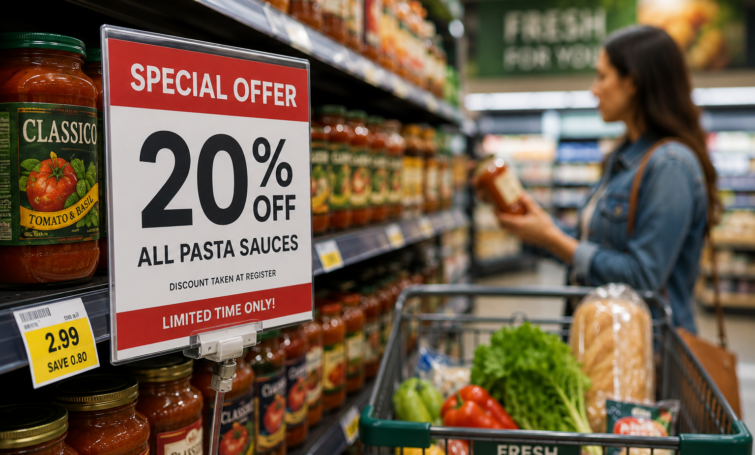
A recent article in Grocery Dive on electronic shelf labels (ESLs) highlights an important shift in retail.
There is broad alignment with the article’s core premise: retailers have a real opportunity to rethink how they communicate value in-store. Historically, the shelf has been one of the least flexible parts of the experience, prices are printed, tags are set, and updates happen only in fixed cycles.
ESLs begin to change that dynamic, introducing speed, accuracy, and a level of responsiveness that has not previously existed at scale in physical stores.
ESLs themselves are somewhat interesting…But what’s most interesting, is what they signal.
What ESLs Actually Represent
For years, in-store execution has lagged behind digital in a pretty meaningful way. Online, you can change an offer instantly, test different approaches, adjust based on behavior. In-store, you’ve been largely locked into what was planned ahead of time.
That gap is starting to close. With ESLs, the shelf becomes more of a live surface. It can reflect what’s happening across the business in near real time, which is a big shift operationally – but also opens the door for doing things differently.
Not just faster pricing updates, but more flexibility in how value shows up at the shelf.
From Pricing to Flexible Value
A lot of the conversation around ESLs leans toward dynamic pricing. In grocery, that framing doesn’t always land well. It brings up questions around fairness and transparency, and in reality, most retailers aren’t trying to constantly fluctuate prices anyway. What feels more relevant is the opportunity to get more flexible in how value is delivered.
Not just lowering prices across the board, but giving customers different ways to engage with value depending on who they are, how they shop, or even where they are. Sometimes that’s a member price. Sometimes it’s a more personalized offer. Sometimes it’s something tied to a bundle or a behavior that actually reflects how people shop in the real world.
That’s where incentives become a lot more powerful. Not as blanket discounts, but as a way to give customers more choice in how they receive value. When that’s done consistently, it starts to build trust. It feels more intentional and less like noise.
Speed Doesn’t Create Agility—Execution Does
There’s a natural assumption that ESLs create agility. They don’t – they really create speed. And in complex retail environments, speed without control can create just as many problems as it solves. If the systems behind pricing, promotions, and loyalty aren’t aligned, ESLs don’t fix that – they just make it more visible to the customer.
You start to see the cracks faster: offers that don’t apply the way they were intended, pricing that doesn’t quite line up at checkout, inconsistencies between what a customer sees online versus in-store.
These issues already exist. ESLs (and other edge technologies) might just surface them more quickly.
In a lot of ways, ESLs don’t create agility. They expose whether you actually have it.
The Real Shift: Toward Real-Time Execution
What ESLs are really pointing to is something broader. Retail is moving toward real-time execution across the entire experience. Not just deciding what an offer should be, but making sure it shows up correctly, everywhere, every time.
That can be the much harder part. It requires systems that can interpret context, apply rules dynamically, and trigger the right outcome in the moment – without everything breaking as complexity increases.
The second that systems aren’t in syc, customers notice. And when that happens often enough, trust starts to erode.
The Missing Layer Behind ESLs
ESLs can display anything, but they can’t decide anything. This is the piece that should not get overlooked. To really get value out of ESLs, you need something behind them that can define logic once and apply it consistently across every touchpoint. Something that can adapt in real time, but still stay controlled.
XCCommerce approaches this differently. XCCommerce acts as a real-time logic engine. Everything runs on simple “if this, then that” rules – based on product attributes, customer context, location, channel, or whatever combination makes sense.
If a customer qualifies, apply the right pricing. If inventory is high in a region, trigger a specific offer. If a basket hits certain conditions, surface something relevant – maybe even an upsell message. The key is that it’s defined once and executes everywhere. POS, e-commerce, mobile, and yes, in-store surfaces like ESLs.
The end result? The shelf isn’t just showing a price, it’s reflecting decisions that are being made in real time across the business.
What Comes Next
Over time, ESLs will become standard. Every retailer will have them – just like how every retailer can run promotions today.
The difference won’t come from the technology itself. It will come from how it’s used – how precise the execution is, how consistent the experience feels, and how much flexibility customers actually have in how they engage with value.
ESLs are just one example of a larger shift taking place in retail
Retailers are continuing to adopt new technologies that increase speed and capability, but also increase the complexity of execution. And they’re not slowing down – they’re only looking to do more.
More personalization. More channels. More flexibility. All of which puts more pressure on the systems underneath to keep everything aligned. That’s really the challenge. Not the shelf itself – but whether the execution behind it can actually keep up.