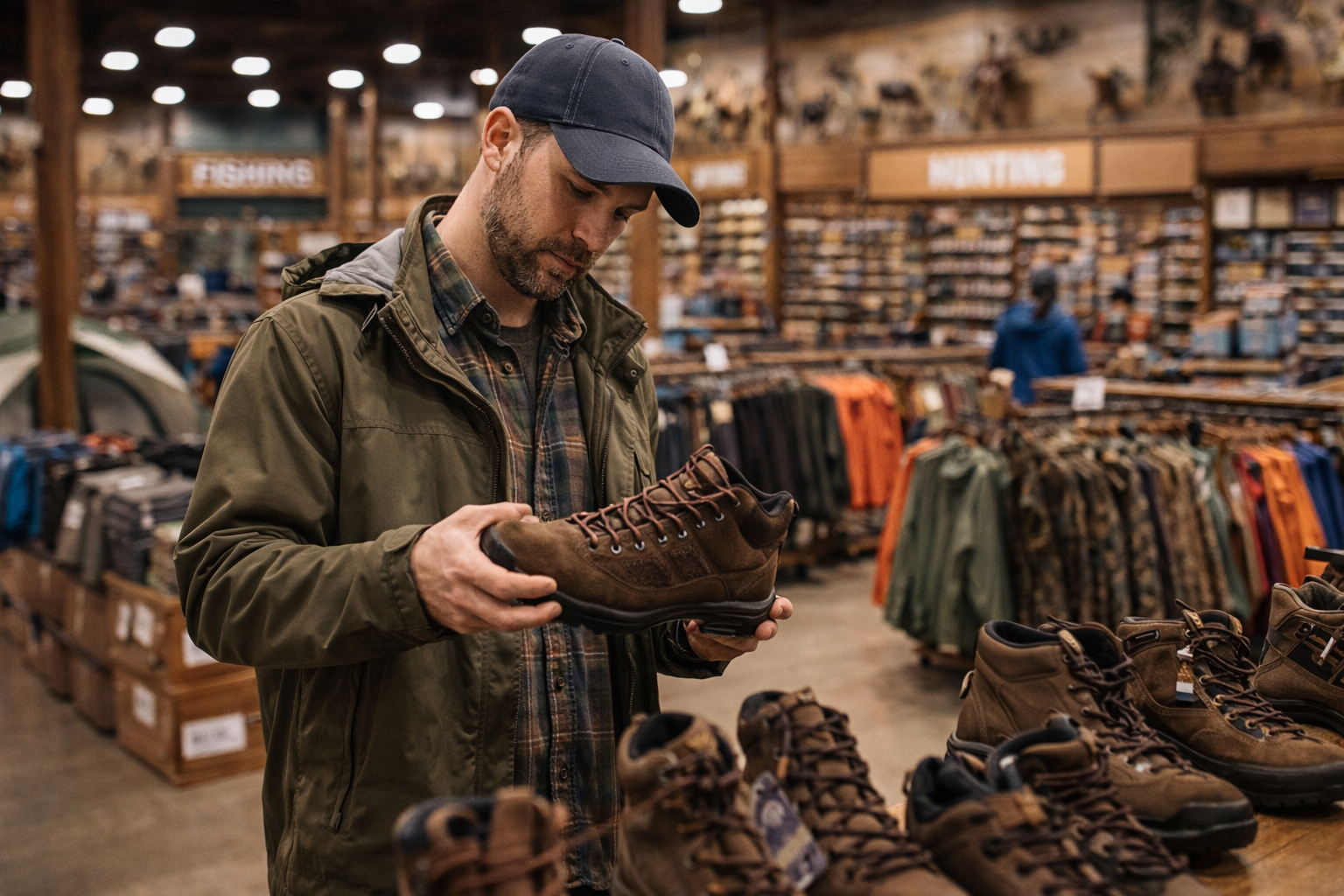
“AI is quickly becoming the starting point for deal discovery.”
Your Customer Is Using AI to Find Better Deals. Are You Ready?
Outdoor and sporting goods shoppers have never been passive. They plan. They research. They compare. Whether it’s gearing up for hunting season, investing in a new bike, or preparing for a weekend on the water, these purchases are intentional. They’re tied to experiences, not just transactions.
But something is changing. The way these customers find value is evolving faster than most retailers realize, and increasingly, it’s being shaped by AI.
A New Starting Point for the Shopping Journey
For years, retailers controlled the entry point to discovery. It started with a search engine, an email, a homepage, or a store visit. Promotions were designed accordingly, campaign-driven, channel-specific, and often disconnected behind the scenes.
Today, that model is breaking down. Shoppers are no longer just searching. They’re asking.
They’re turning to AI tools to compare prices, surface promotions, and even decide whether now is the right time to buy. According to XCCommerce’s recent shopper study, more than 70% of consumers are already exploring AI to find the best deals, and nearly one-third are actively using it to compare options and identify savings.
That shift may seem subtle, but its implications are significant. AI doesn’t just present options. It filters them. It prioritizes them. It decides what gets seen and what doesn’t.
Value Still Matters, But It Looks Different Here
Outdoor retail has always operated with a different kind of customer.
This isn’t a category driven purely by impulse or trend. These are higher-consideration purchases, often tied to performance, durability, and purpose. A customer buying a tent or a pair of trail shoes isn’t just looking for the lowest price. They’re looking for the right product at the right value.
That distinction matters.
Even so, promotions still influence behavior. Our research shows that 79% of shoppers are most motivated by simple, clear offers like percent-off or dollar-off discounts. And nearly half say they’ve purchased more than planned or even switched brands entirely when presented with a compelling promotion.
In other words, value still drives action, but it has to be easy to understand and easy to access.
“If AI can’t understand your promotion, it can’t recommend it.”
The Visibility Problem Retailers Aren’t Talking About
Here’s where the disconnect begins. Most promotions were never designed for this new environment. They were built for human interpretation, email subject lines, in-store signage, campaign messaging, not for AI. And AI doesn’t interpret nuance the way a person does. It looks for structure. Clarity. Consistency.
If a promotion is overly complex, inconsistently applied across channels, or buried in systems that don’t communicate with each other, there’s a good chance it won’t surface when a customer asks AI for the best deal.
That creates a new kind of risk, one that has nothing to do with the strength of the offer itself. If AI can’t understand your promotion, it can’t recommend it. And if it’s not recommended, it might as well not exist.
From Promotion Strategy to Promotion Visibility
This is where the conversation needs to shift.
Retailers often focus on what promotions to run, discount depth, timing, segmentation. Those decisions still matter. But increasingly, the question is also how those promotions are structured and executed.
Because in an AI-driven discovery model, execution becomes visibility. Promotions need to be clearly defined, consistently applied across channels, and available in real time. Not just for operational efficiency, but so they can be accurately surfaced, compared, and recommended.
This is exactly where many legacy approaches fall short. Promotions live in silos, different logic in POS, eCommerce, loyalty, and marketing systems, creating fragmentation that both customers and AI can’t easily reconcile.
Why This Matters More in Outdoor and Sporting Goods
If this were purely a price-driven category, the answer might be simpler: compete harder on discount. But that’s not how outdoor retail works. Customers care about expertise. They rely on knowledgeable associates. They want confidence in their purchase, not just a lower price. There’s a strong connection to brand, community, and experience that goes beyond the transaction.
That’s an advantage, but only if it’s paired with a modern approach to promotions.
AI may be guiding customers to the deal, but what happens next still matters. The in-store experience, the quality of the product, the relevance of the offer, all of it contributes to whether that customer converts and comes back.
The retailers who win won’t choose between technology and experience. They’ll connect them.
Building for an AI-Driven Retail Environment
Adapting to this shift doesn’t require a complete overhaul of strategy. It requires a more disciplined approach to execution.
Promotions need to be structured in a way that is both flexible and understandable. They need to work the same way everywhere, online, in-store, across channels, so that what a customer sees is what they get.
This is where a unified incentives engine becomes foundational.
By centralizing promotion logic and execution, retailers can ensure that even complex offers are expressed clearly, consistently, and in real time. That not only reduces operational friction, it increases the likelihood that those offers will actually be surfaced in AI-driven discovery.
In a world where customers are asking AI where to shop, that visibility is no longer optional.
“It’s not just about having the right offer. It’s about making sure it can be found.”
A Different Kind of Competition
It’s tempting to frame this as a pricing challenge. It’s not. It’s a visibility challenge.
The competitive set is no longer just the retailer down the street or the one with the better assortment. It’s the retailer whose offers are easiest to find, easiest to understand, and easiest to trust, both for the customer and for the systems guiding them.
Outdoor and sporting goods retailers are well positioned to win in this environment. They already have the experience, the expertise, and the customer loyalty.
The opportunity now is to ensure their promotions are just as strong. Because increasingly, it’s not just about having the right offer. It’s about making sure it can be found.
Where XCCommerce Fits In
This is exactly the challenge XCCommerce was built to solve.
In a world where promotions need to be executed consistently, surfaced accurately, and understood instantly, fragmented systems and legacy approaches simply can’t keep up. XCCommerce gives retailers a single, unified way to manage and execute incentives across every channel, including store, online, and mobile, ensuring that even the most complex offers are clear, consistent, and available in real time.
The result is not just better operations. It is better visibility. And in an AI-driven retail environment, visibility is what drives conversion. When your promotions are structured the right way, executed the right way, and exposed the right way, they do more than compete. They show up, stand out, and win.
Incentives Without Limits.
Key Takeaways
- AI is quickly becoming the starting point for deal discovery, with over 70% of shoppers exploring AI tools to find the best offers
- Outdoor and sporting goods shoppers still prioritize quality and purpose, but value remains a key driver of conversion
- Promotions that are complex, inconsistent, or siloed risk being invisible in AI-driven search and recommendations
- Retailers must shift from promotion strategy to promotion visibility, ensuring offers are clear, consistent, and real-time
- The winners will combine AI-friendly promotions with strong in-store experience and expertise
- A unified incentives approach enables retailers to execute promotions in a way that AI can find and customers can trust
Frequently Asked Questions
How are shoppers using AI to find deals today?
Shoppers are increasingly using AI tools to compare prices, uncover promotions, and decide when and where to buy. Instead of browsing multiple websites, they can ask a single question like “Where can I get the best deal on hiking boots?” and receive aggregated, ranked recommendations. According to XCCommerce’s shopper study, more than 70% of consumers are already exploring AI for deal discovery, with nearly one-third actively using it.
Why might my promotions not show up in AI search results?
AI tools prioritize offers that are clear, structured, and consistent. If promotions are overly complex, inconsistently applied across channels, or not easily interpretable, they may not be surfaced. Many legacy promotion systems were designed for human interpretation, not machine-driven discovery, which creates a visibility gap.
Why might my promotions not show up in AI search results?
AI tools prioritize offers that are clear, structured, and consistent. If promotions are overly complex, inconsistently applied across channels, or not easily interpretable, they may not be surfaced. Many legacy promotion systems were designed for human interpretation, not machine-driven discovery, which creates a visibility gap.
What makes a promotion “AI-friendly”?
AI-friendly promotions are simple, clearly defined, and consistently executed across all channels. They are structured in a way that makes it easy for systems to interpret key elements like discount type, eligibility, timing, and exclusions. Real-time accuracy and consistency are also critical so that AI tools surface the correct offer.
Are discounts still the most effective way to drive sales?
Yes, but clarity matters more than ever. Research shows that about 79% of shoppers are most motivated by straightforward offers like percent-off or dollar-off discounts. However, relevance and timing are just as important, especially in high-consideration categories like outdoor and sporting goods.
How does AI influence brand switching in retail?
AI makes it easier for shoppers to compare options across brands instantly. As a result, customers are more likely to switch brands if a better or more visible offer is available. In fact, nearly half of shoppers say they have purchased more than planned or switched brands when presented with a compelling promotion.
What challenges do outdoor and sporting goods retailers face with promotions?
Outdoor retailers must balance value with performance, quality, and expertise. Their promotions often involve seasonal timing, high-ticket items, and bundled gear. These complexities can make offers harder to structure and execute consistently, which increases the risk that they won’t surface in AI-driven discovery.
How can retailers improve promotion visibility in an AI-driven world?
Retailers should focus on simplifying promotion structures, ensuring consistency across channels, and enabling real-time execution. Centralizing promotion logic helps eliminate discrepancies and ensures that offers are accurately surfaced wherever customers are searching.
What is a unified incentives engine and why does it matter?
A unified incentives engine centralizes the creation, management, and execution of promotions across all channels. This ensures that offers are consistent, accurate, and available in real time. In an AI-driven environment, this consistency improves both operational efficiency and the likelihood that promotions will be discovered and recommended.
How does XCCommerce help retailers adapt to AI-driven shopping behavior?
XCCommerce enables retailers to manage and execute promotions through a single platform, ensuring consistency across store, eCommerce, and mobile channels. By structuring promotions clearly and executing them in real time, XCCommerce helps retailers increase visibility in AI-driven discovery and deliver offers that customers can easily find and trust.